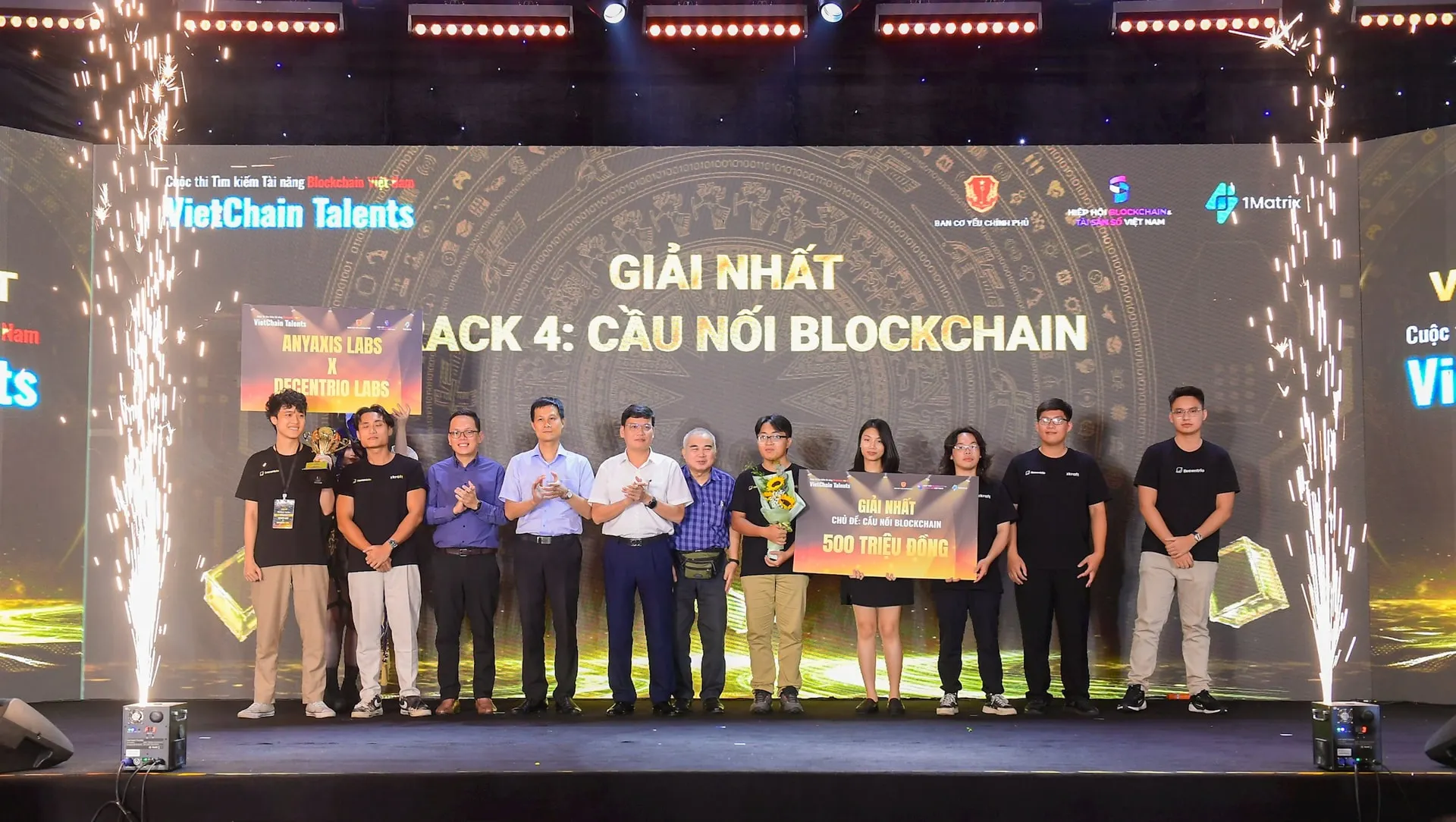
ZKPortal: National Champion of VietChain Talents 2025 (Bridge Track). A ZK-powered solution by AnyAxis Labs that outperformed 138 submissions
TL;DR — ZKPortal
At its core, a cross-chain bridge answers one deceptively simple question:
How can Chain B be certain that something really happened on Chain A?
For example:
Did a user actually lock 10 tokens on Chain A before minting or unlocking assets on Chain B?
This question defines the entire security model of a bridge. If the answer is wrong, the bridge fails—no matter how elegant the UI or how fast the transaction feels.

Most production bridges today rely on a multisig model.
A group of operators monitors Chain A.
If enough of them agree that an event happened, they collectively authorize the corresponding action on Chain B.
This approach is popular because it’s simple and flexible.
It is also structurally fragile.
History has been unforgiving. Bridge-related exploits account for some of the largest losses in the blockchain ecosystem.

This is not a UX issue.
It’s a fundamental trust model problem.
ZKPortal is built around a different principle:
Cross-chain state should be verified cryptographically, not attested by operators.
Using zero-knowledge proofs (ZK), the destination chain can verify that:
This changes the bridge security model from:
“We trust these actors.”
It’s a meaningful shift—but not a free one.
While ZK-based verification dramatically improves security assumptions, it introduces a new challenge: performance.
ZK bridges typically rely on light-client-style verification, where the state of one chain is proven inside a ZK circuit and then verified on another chain.
In practice, this often means:
In other words:
ZK bridges are secure by design, but not always usable by default.

This is the gap ZKPortal focuses on.
When you profile ZK light-client systems, one issue dominates:
Consensus signature verification consumes the vast majority of proving time.
In many designs, processing validator signatures accounts for nearly all the computational cost inside the ZK circuit.
If this part stays slow, the entire bridge stays slow—no matter how optimized the rest is.
ZKPortal targets this exact pain point.
Instead of treating proving latency as an unavoidable cost, the project focuses on optimizing elliptic-curve computations—the core operation behind signature verification—using ECIP-based acceleration.
The result is a dramatic reduction in proof generation latency, with a clear path toward:

This is not a cosmetic optimization.
It’s an engineering-level intervention where it actually matters.
Many teams can talk about ZK.
Fewer teams can:
ZKPortal demonstrates how AnyAxis Labs approaches hard problems:
Winning a national competition is validation—but the deeper signal is this:
the team didn’t avoid complexity; they went straight at it.

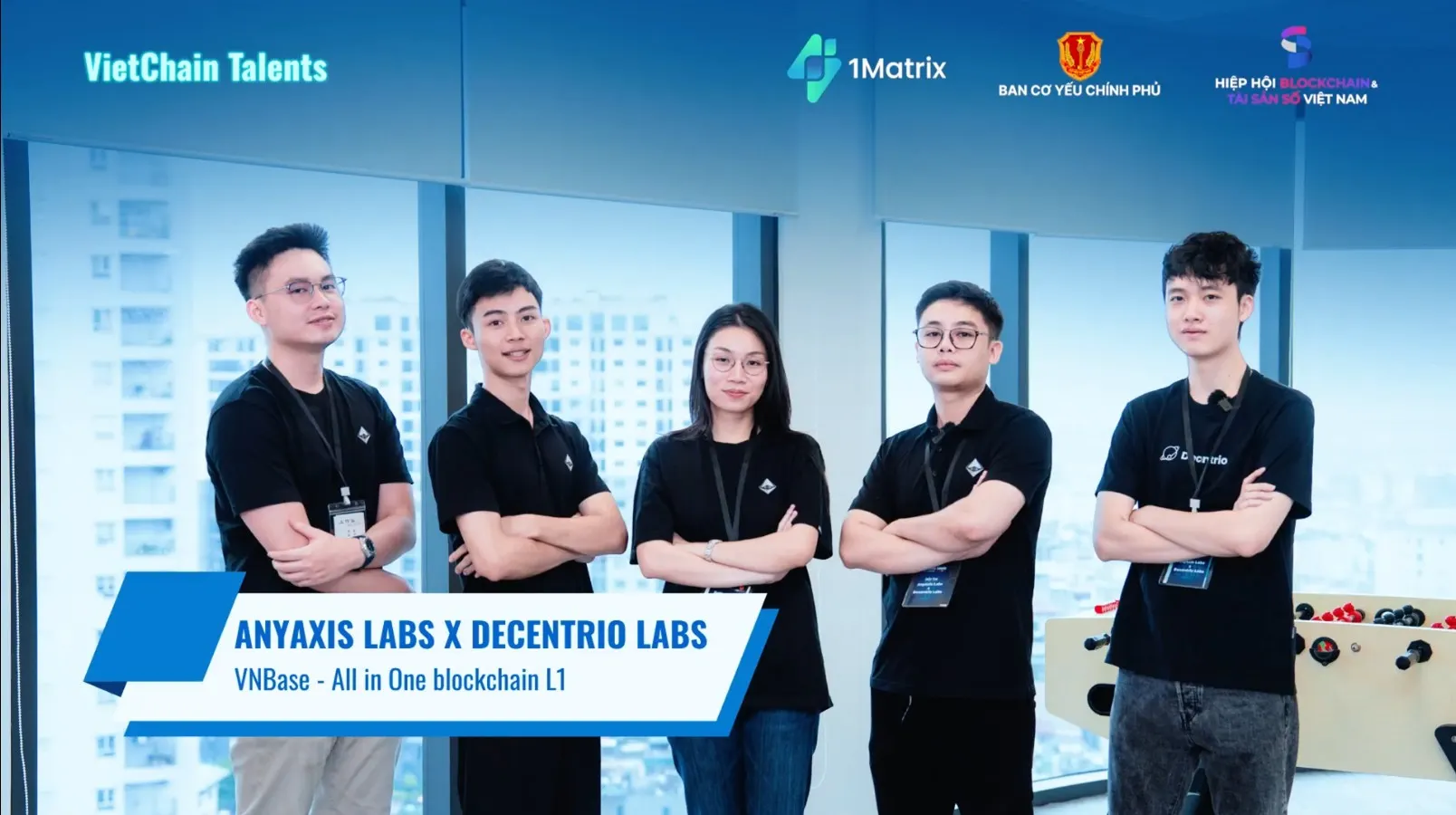
Top 5 Finalist (Layer-1 Track) at VietChain Talents 2025. VNBase proves AnyAxis Labs' engineering depth in building core blockchain infrastructure.

BiUwU addresses creator burnout and passive fan engagement by merging AI influencers with blockchain incentives. Built on Aptos, the platform features a dual-token economy and gamified livestreams, enabling 24/7 interaction and decentralized monetization.
Sentra solves the security bootstrapping problem for new decentralized services on Aptos by enabling the restaking of APT and liquid APT. The protocol introduces a modular security marketplace and Merkle-proof reward system to lower costs for builders while maximizing yields for stakers.