Bucky Finance: Unifying Cross-Chain Liquidity via CCIP & AI Credit Scoring ($15k First Prize)
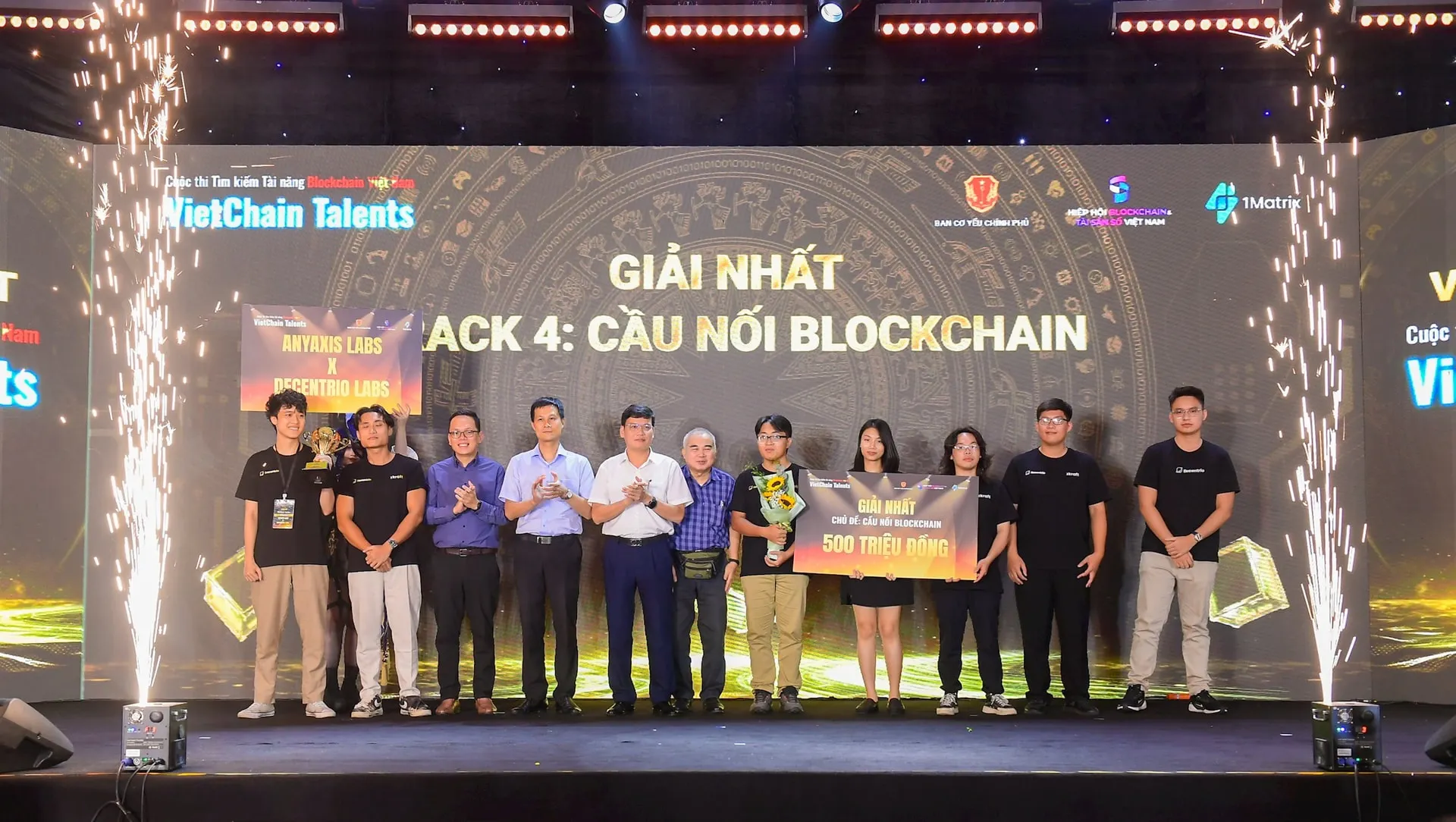
Bucky Finance addresses liquidity fragmentation with an omnichain lending protocol using Chainlink CCIP and AI credit scoring. The project won First Prize ($15,000) at the Chainlink Hackathon by successfully implementing a "Deposit Local, Borrow Global" model.
Inspiration
The challenges in lending and borrowing tokens across different blockchain networks are significant. To address these challenges, BuckyFinance envisions creating an ecosystem that can harness liquidity across the entire blockchain space. Utilizing Chainlink's advanced technologies such as Cross-Chain Interoperability Protocol (CCIP), Functions APIs, and Data Feeds, we aim to realize this vision effectively.
Features
Deposit: The user will deposit a certain amount of a token onto a chain. Then, the contract on that chain will call the Main Router on Avalanche to update the state.
Mint/Borrow: The user wants to mint tokens on a chain. First, conditions for minting are checked. Then, the backend calls the main Router to update the state. Once confirmed, the minting information is sent to the chain.
Redeem Collateral: The user calls the backend to check conditions for redeeming collateral. If conditions are met, the backend calls the main router to return the funds to the user.
High-Level Architecture
BuckyFinance facilitates the depositing of tokens on one blockchain and borrowing from another. This is achieved through a robust architecture that leverages Chainlink infrastructure for a secure and efficient process. The collateral rate and credit system are determined based on a comprehensive evaluation of various factors, including:
Total wallet balance
Number of transactions made
Volume of transactions participated in on-chain
These data points are continuously monitored by many off-chain services and updated via Chainlink Functions.
How It Is Built
We implemented the following Chainlink technologies to build the protocol:
CCIP (Cross-Chain Interoperability Protocol): Used for transferring tokens across different blockchains seamlessly.
Chainlink Data Feed: Utilized to obtain real-time price data from decentralized oracles, ensuring accurate and up-to-date information for collateral valuation.
Chainlink Functions: Employed to query and calculate credit scores based on a robust AI-powered infrastructure, which takes into account various on-chain activities and balances.
In-depth Architecture
Borrowing and Lending in Depth
In our protocol's architecture, there is a Main Router deployed on Avalanche for storing all protocol information and logic. It is the center of our protocol; every transaction must be confirmed by the Main Router to go through.
Deposit Collateral and Borrow DSC
Suppose users have some ETH on Arbitrum and they want to have some funds on Polygon without selling the ETH or bridging it. They can leverage BuckyFinance by depositing ETH into the protocol and then borrowing our DSC token on Polygon, all in one transaction.
How it works: Users can deposit their collateral into our Depositor contract on Arbitrum. The Depositor then sends a CCIP message to the Main Router on Avalanche to notify the protocol that the user has deposited funds. After that, the Main Router sends a CCIP message to the Minter contract on Polygon, which will mint DSC tokens for the user.
Borrow DSC
If users have collateral gathered on various chains, such as Arbitrum and Ethereum, and they want to borrow funds on Optimism, they can approach the Main Router on Avalanche to borrow. The Main Router will send a CCIP message to the Minter contract on Optimism to mint DSC tokens for the user.
The amount of DSC tokens a user can borrow is determined by the collateral they have deposited on all supported chains and their credit, calculated by:
Amount can be borrowed = Total Deposited Collateral on All Chains × (Loan to Value Ratio + Credit Score)
Redeem Collateral
If the user wants to withdraw their collateral on a chain, such as Arbitrum, they must go to the Main Router on Avalanche. It will confirm if the user can withdraw the collateral. If confirmed, the Main Router will send a CCIP message to the Depositor on Arbitrum to notify it to send tokens back to the user.
Users can withdraw their collateral if they don't breach their health factor, which is determined by:
Health Factor = (Total Deposited Collateral on All Chains × Liquidation Threshold) / Total Borrowed DSC on All Chains
Swap DSC Token Multichain
If users want to swap DSC tokens from chain A to chain B, they can do so in one transaction by using the burnAndMint function on chain A's Minter contract. The Minter will burn DSC on chain A, then send a CCIP message to the Main Router. The Main Router will then send a CCIP message to the Minter contract on chain B to mint DSC tokens for the user.
Credit System
We leverage Chainlink Functions to call our Credit API in a decentralized manner. The API aggregates a user's activity information in the DeFi ecosystem and returns the user's credit score, which is evaluated using AI based on the following criteria:
The user's total wallet balance.
The number of transactions made.
The volume of on-chain transactions participated in.
The amount borrowed from major lending protocols such as Aave, Compound, Spark, etc. If their collaterals have been liquidated, their credit score will decrease.
Their involvement in staking, governance voting, and other community activities, reflecting the user's engagement and commitment to the ecosystem.
Conclusion
Bucky Finance is more than a hackathon project; it is a blueprint for DeFi 2.0, where the boundaries between blockchains are erased, and a user's on-chain reputation becomes a tangible asset with real financial value.
Similar Posts
You Might Also Want to Read
VNBase: Designing a Sovereign Layer-1 Blockchain for Real-World Adoption
Top 5 Finalist (Layer-1 Track) at VietChain Talents 2025. VNBase proves AnyAxis Labs' engineering depth in building core blockchain infrastructure.
Read More
ZKPortal: A ZK-Powered Cross-Chain Portal Built by AnyAxis Labs × Decentrio
ZKPortal: National Champion of VietChain Talents 2025 (Bridge Track). A ZK-powered solution by AnyAxis Labs that outperformed 138 submissions
Read More
BiUwU: Revolutionizing Fan Economies with AI KOLs & On-Chain Gamification on Aptos ($35,000 First Prize)
BiUwU addresses creator burnout and passive fan engagement by merging AI influencers with blockchain incentives. Built on Aptos, the platform features a dual-token economy and gamified livestreams, enabling 24/7 interaction and decentralized monetization.